The past as an inescapable force
Other PeopleThe past as an inescapable force is a central idea in Mary Lamb’s experience of memory: what she cannot consciously recall returns through dreams, unsettles her waking life, and challenges the belief that the present can leave history behind. The novel presents the past not as a completed period but as an active pressure, repeatedly breaking into the now even when its origins remain obscure.
Dreams as a Return of the Past
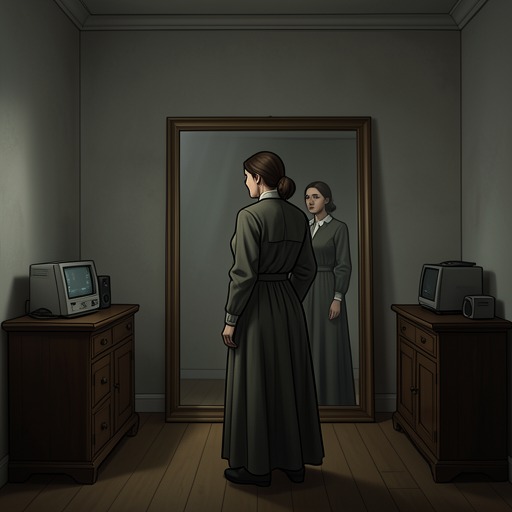
Mary’s days follow familiar tracks, but her nights are unpredictable and frightening. Before sleep, her mind struggles against the dreams; when they arrive, she has little control over them. Their images include places and sensations she does not recognize, yet she feels that the dreams come from the past. Their strangeness therefore does not make them feel irrelevant: they seem to carry an experience that conscious memory cannot yet explain.
The dreams recur with a pattern of pursuit and reversal. In one, Amy runs ahead of a beast, then becomes Mary and its prey; the chase returns night after night. This shifting identity links Amy and Mary within the dream without resolving what that connection means. The repetition makes the past feel less like a recollection than a force that keeps reenacting itself. Mary’s response is also ambivalent: she feels that she asks for the dreams and wants them to continue, even as they cause terror.
The Present Under Pressure
The idea becomes explicit after Mary has slept through an experience she cannot fully account for. As she walks with Sharon, improving weather and the sense that things may be coming right offer a brief image of renewal. Against that lift, Mary senses that something has come back to her in the night and wonders whether the past has waited until she was asleep to reach her. The contrast makes recovery feel provisional: a better day can coexist with an inward disturbance that has not passed.
The narrative describes the past as thwarting and indefatigable, capable of returning through forgotten wrongs and intruding on thought and sleep. This account also changes the meaning of time. The present does not last long enough to provide a secure refuge, while the future remains uncertain; the past, by contrast, endures and eventually catches up with the living. The recurring nightmares give that claim a dramatic form, converting an abstract idea about memory into a cycle Mary must undergo again and again.
Persistence and the Possibility of Change
The force of the past does not mean that every future is fixed. The narrative places Mary among fallen women seeking a second chance, and says that she finds one. That possibility sits in tension with the dreams: a new beginning is imaginable, but it is not the same as erasing what has happened or making its return impossible. The concept therefore holds two claims together. History cannot simply be outrun or forgotten, yet a person may still find a break in its repetition and move toward another life.